The CELEBRATING QUALITY Series: 8. Work–Life Balance in GMP Roles
Supporting resilience, performance, and wellbeing across therapeutic goods manufacturing
Working in Good Manufacturing Practice (GMP) regulated environments has never been a low‑pressure endeavour. The responsibility to ensure patient safety, product quality, and regulatory compliance carries inherent stress, and this pressure has only intensified in recent years. As regulatory scrutiny increases, global supply chains remain fragile, and digital transformation accelerates, GMP professionals are being asked to do more, often with fewer resources and tighter timelines.
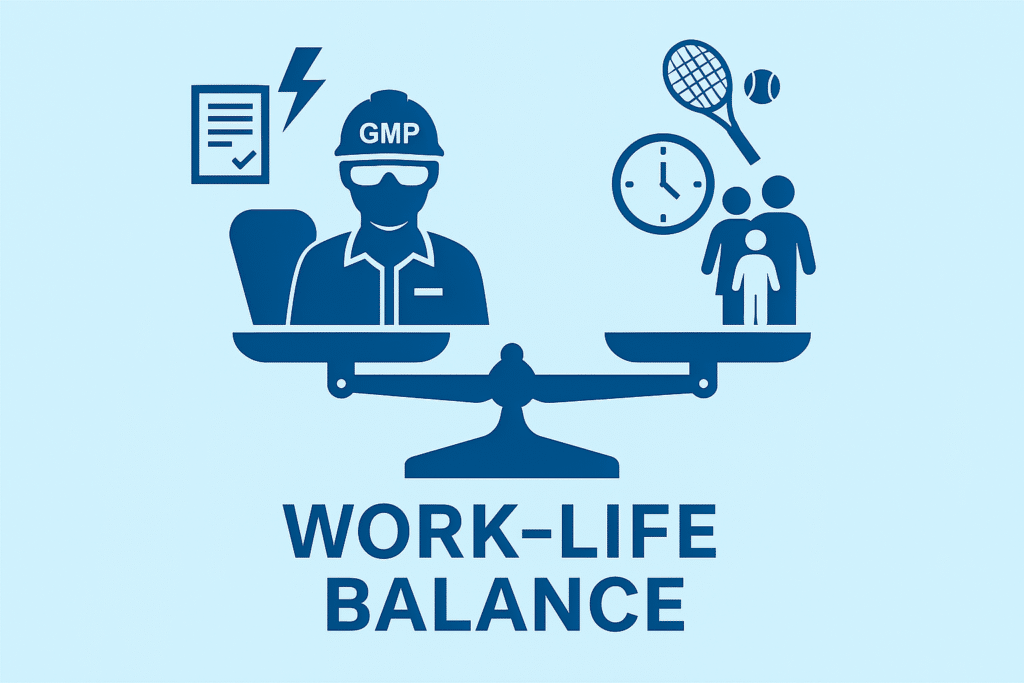
In 2026, the conversation around work–life balance in GMP roles is no longer a “nice to have”. It is increasingly being recognised as a core component of organisational resilience, compliance maturity, and staff retention. Regulators expect robust quality systems, but those systems are ultimately maintained by people. When individuals are exhausted, disengaged, or burnt out, quality risks increase rather than decrease.
This blog explores practical, experience‑based strategies that can support GMP professionals in managing stress during audits, making remote and hybrid work sustainable, and maintaining mental health in high‑pressure environments. Rather than prescribing rigid solutions, the focus is on approaches that can be adapted to different organisational cultures, roles, and stages of regulatory maturity.
Understanding the unique pressure points of GMP roles
Before discussing solutions, it is helpful to acknowledge why work–life balance can be particularly challenging in GMP environments.
GMP professionals often operate at the intersection of:
- Regulatory expectation, where deviations can have serious commercial and patient health impacts
- Operational urgency, particularly during manufacturing campaigns, batch release activities, or product shortages
- Audit and inspection cycles, which can create prolonged periods of heightened stress
- Resource constraints, especially in smaller or rapidly growing organisations
Quality incidents do not respect business hours, and regulators do not lower expectations because teams are under strain. Recognising this reality is an important first step in developing realistic and effective approaches to balance.
Managing stress during audits and inspections
Reframing audits as ongoing activities rather than peak events
One of the most common sources of stress for GMP professionals is, and will remain, regulatory audits and inspections. While some level of pressure is unavoidable, stress often escalates when audits are treated as extraordinary events rather than a natural extension of day‑to‑day operations.
Shifting towards a mindset of continuous inspection readiness can help distribute workload and emotional strain more evenly throughout the year. Maintaining audit‑ready documentation, routinely reviewing procedures, and embedding self‑inspection programmes allows teams to approach audits with greater confidence and less last‑minute urgency.
This approach can reduce the sense of crisis that often accompanies audit announcements.
Clarifying roles and responsibilities early
Audit stress is frequently exacerbated by uncertainty – particularly around who owns which responses, documents, or discussions with inspectors. Taking time well in advance of an audit to clearly define roles can significantly reduce cognitive load during the inspection itself.
This might involve:
- Nominal subject matter experts for key systems
- Clear escalation pathways for unexpected questions
- Pre‑defined document retrieval processes
When individuals understand exactly what is expected of them, they are better able to focus, communicate clearly, and recover more effectively at the end of each audit day.
Ensure training and practice for personnel
Ensuring personnel are appropriately trained to participate in GMP audits plays a significant role in reducing stress during inspection activities. Training that goes beyond procedural awareness – such as mock interviews, role‑play scenarios, and guidance on how to respond confidently and factually to inspectors – can help individuals feel prepared rather than exposed. When staff understand both what is expected of them and how audits typically unfold, audits are more likely to be experienced as structured professional engagements rather than high‑pressure interrogations.
Supporting recovery during extended audits
Multi‑day audits can lead to cumulative fatigue, especially when preparation extends well beyond normal working hours. Encouraging small but deliberate recovery practices – such as protected breaks, realistic end‑of‑day cut‑offs, and shared debriefs – can help teams maintain energy and morale.
Importantly, leaders play a critical role here. When senior staff visibly model healthy behaviours during audits that protect their wellbeing, it creates permission for others to do the same without fear of appearing disengaged.
Making remote and hybrid work sustainable in GMP roles
Recognising where flexibility genuinely adds value
Remote and hybrid working arrangements are now well‑established across many quality, regulatory, and validation functions. However, in GMP environments, flexibility must be balanced carefully against data integrity, confidentiality, and operational oversight.
Rather than adopting blanket policies, organisations are increasingly benefiting from role‑specific flexibility. For example:
- Document review, regulatory writing, and quality system maintenance may lend themselves well to remote work
- On‑site presence may remain critical for batch release support, investigations, or manufacturing oversight
By aligning flexibility with task requirements, organisations can support work–life balance without compromising compliance, and personnel are clear about what is expected of them.
Establishing clear boundaries in remote environments
One of the less visible risks of remote work is boundary erosion. GMP professionals working from home may find it harder to disengage, particularly when global operations need extended time‑zone coverage.
Establishing explicit expectations around availability, response times, and after‑hours escalation can help prevent chronic overwork. Encouraging teams to “close the loop” at the end of the day – for example by documenting handovers rather than remaining online – supports both business continuity and personal wellbeing.
Maintaining connection and visibility
Remote work can inadvertently lead to isolation, especially in roles that already involve high levels of individual accountability. Leaders who create regular, structured touchpoints – such as quality forums, peer review sessions, or informal check‑ins – can help maintain a sense of shared purpose.
These interactions are not simply social. They provide valuable opportunities to normalise challenges, share workload pressures, and identify early signs of burnout or disengagement.
Supporting mental health in high‑pressure GMP environments
Normalising conversations about mental health and stress
In many regulated industries, there is still a perception that discussing stress or mental health may be seen as a weakness. In reality, unaddressed stress poses a far greater risk to both individuals and organisations.
Creating psychologically safe environments where staff can raise concerns without stigma is increasingly being recognised as a marker of mature quality culture. This may involve leadership training, open discussions during team meetings, or the visible promotion of employee assistance programmes.
When mental health is treated as part of overall operational risk management, it becomes easier to address proactively.
A safe space workplace
One pharmaceutical manufacturer recognised recurring audit stress and investigation fatigue were contributing to staff disengagement and high turnover in Quality. Rather than focussing solely on individual resilience, leadership made deliberate effort to create a psychologically safe environment.
The organisation introduced regular quality forum, encouraging staff to openly discuss workload pressures, near‑misses, and improvement ideas without fear of blame. Leaders were trained to respond to issues with curiosity rather than defensiveness, and investigation meetings were reframed to system learning rather than individual fault. During audits, daily debriefs acknowledged effort, clarified expectations, and ensured staff were not carrying home unresolved stress.
Staff became more willing to raise concerns early, investigations improved, and audit outcomes became more consistent. Perhaps most importantly, employee engagement scores increased, and the organisation observed a measurable reduction in absenteeism. This safer environment was not only beneficial for wellbeing but also strengthened overall GMP performance.
Building personal resilience without shifting responsibility
Resilience is often discussed at an individual level, but it should not be used to shift responsibility away from organisations. That said, supporting individuals to develop practical resilience skills can complement systemic improvements.
Approaches that may be helpful include:
- Encouraging realistic prioritisation rather than perfectionism
- Supporting time‑management techniques tailored to regulatory workloads
- Promoting recovery practices such as movement, sleep, and cognitive rest
These strategies are most effective when embedded within a supportive organisational framework rather than positioned as standalone solutions.
Recognising cumulative stress and regulatory fatigue
Unlike acute incidents, regulatory fatigue often builds gradually. Continuous change – including new guidance, evolving expectations, and repeated inspections – can create a sense of never‑ending pressure and nervous anticipation.
Regular workload reviews, rotation of high‑intensity responsibilities where possible, and acknowledging effort even when outcomes are routine can help mitigate this effect. Simply recognising that fatigue is a predictable response to sustained pressure can be validating for staff and reduce feelings of isolation.
The role of leadership in enabling sustainable balance
Leadership behaviour remains one of the most powerful influences on work–life balance in GMP environments. Leaders who demonstrate trust, transparency, and realistic expectations create conditions in which teams can perform consistently without burning out.
This may involve:
- Setting achievable timelines for remediation activities
- Prioritising work based on genuine patient and quality risk
- Modelling healthy behaviours during peak periods
In 2026, effective GMP leadership is increasingly defined not just by technical expertise, but by the ability to sustain people as well as systems.
Looking ahead: Work–life balance as a Quality enabler
As regulatory expectations continue to evolve, organisations that invest in sustainable work practices are likely to see tangible benefits. Improved retention, stronger quality culture, and more resilient compliance frameworks all flow from environments where people are supported to perform at their best over the long term.
Work–life balance in GMP roles is not about reducing standards or avoiding accountability. Rather, it is about recognising that high‑quality outcomes depend on healthy, engaged professionals who are able to think clearly, act decisively, and recover effectively from pressure.
By adopting thoughtful, practical strategies in 2026 and beyond, organisations can help their GMP teams not just survive high‑pressure environments, but genuinely thrive within them.
How PharmOut can help
PharmOut supports GMP‑regulated organisations across pharmaceuticals, medical devices, biologics, and medicinal cannabis by strengthening quality systems while keeping people at the centre of compliance. Through audit readiness programmes, quality system optimisation, resourcing support, and training, PharmOut helps organisations manage regulatory pressure in a way that is both effective and sustainable.
Explore elearning and public courses via onlinegmptraining.com, or contact us via the website or via email to tailor workshops to your needs.
This is the eighth and final blog in the Celebrating Quality series. For more support in your Quality career please read:
- The CELEBRATING QUALITY Series: 1. New Year Resolutions for Quality Assurance Professionals
- The CELEBRATING QUALITY Series: 2. The Quality Professional’s Toolkit for a Successful Year
- The CELEBRATING QUALITY Series: 3. The Future of Quality Careers
- The CELEBRATING QUALITY Series: 4. Recognising Quality Achievements
- The CELEBRATING QUALITY Series: 5. 2026 Quality Trends: What Should Be on Your Radar?
- The CELEBRATING QUALITY Series: 6. Bridging the Gap: Encouraging a Quality Mindset Without Friction
- The CELEBRATING QUALITY Series: 7. What Makes an Exceptional Quality Leader in GMP Manufacturing?
Frequently Asked Questions (FAQ)
GMP roles involve high regulatory accountability, time‑critical decisions, and audit readiness requirements, which can create sustained pressure if not managed proactively.
Targeted audit training helps personnel understand what to expect, how to respond confidently to inspectors, and where responsibilities sit, reducing uncertainty and anxiety.
Yes. Spreading preparation activities across the year reduces last‑minute workload spikes and helps audits feel like routine business activities rather than crisis events.
Absolutely. Psychological safety, open communication, and supportive leadership can coexist with strong compliance and often improve quality outcomes.
PharmOut provides audit readiness support, GMP training, quality system optimisation, and leadership coaching to help organisations manage regulatory pressure sustainably.